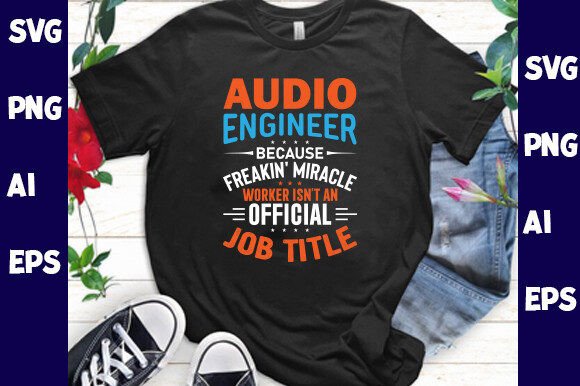
Audio Engineer Because Freakin Miracle: A Designer’s Review
As an embroidery designer who has spent countless hours digitizing and testing files for real-world application, I approach every new machine embroidery design with a critical eye. It is not just about whether the image looks good on a screen; it is about how it translates to thread, how it holds up after washing, and whether it adds genuine value to a finished product. Recently, I evaluated Audio Engineer Because Freakin Miracle, a digital artwork file marketed primarily for cutting software but increasingly relevant for hybrid craft projects. Here is my practical assessment of how this design performs in a professional embroidery context.
First Impressions and Visual Personality
The first thing that strikes me about Audio Engineer Because Freakin Miracle is its bold, unapologetic personality. The phrase captures a specific niche humor that resonates deeply with audio professionals, sound technicians, and music enthusiasts. Visually, the layout suggests a strong typographic focus. In the world of T-Shirt Designs and Graphics, text-heavy designs are common, but they present unique challenges when moving from vector cuts to stitched thread.
The mood is playful yet professional, striking a balance that makes it suitable for both casual wear and work-related apparel. For an embroidery project, the clarity of the lettering is paramount. If the original SVG features intricate serifs or tight kerning, those details must be carefully considered during the digitizing process. My initial observation is that this design relies heavily on legibility. It is not a subtle, background pattern; it is a statement piece. This means the stitch types chosen—whether satin stitch for smaller text or fill stitch for larger block letters—will define the success of the final output.
Real-World Application: The Custom Sweatshirt Scenario
To truly test the viability of Audio Engineer Because Freakin Miracle, I imagined a specific client request: a custom gift for a studio owner who spends twelve-hour days mixing tracks. The goal was to create a high-quality, durable sweatshirt embroidery piece that could withstand daily wear in a climate-controlled studio environment.
In this scenario, the design would likely be placed on the left chest or as a larger back print. For a chest placement, the scale needs to be reduced significantly. This is where the "real case" angle becomes critical. If the original digital embroidery file or SVG source has very fine lines, shrinking it for a 4x4 hoop might cause the threads to merge, turning distinct letters into a blob. However, if the design uses bold, sans-serif typography, it scales down beautifully. I envision using a contrasting thread colors scheme—perhaps a bright electric blue or neon green against a charcoal heather sweatshirt—to mimic the LED lights often found on audio mixing boards. This thematic connection enhances the personalized gift aspect, showing the recipient that thought went into the design choice.
Performance on Different Fabrics
The versatility of this design extends beyond sweatshirts. As a tote bag design, it offers excellent visibility. Canvas bags provide a stable, non-stretchy surface that is ideal for dense stitching. The fabric texture of canvas allows for higher stitch density without puckering, ensuring the text remains crisp and readable. Conversely, using this on a thin, stretchy t-shirt requires careful stabilization. Without a proper cut-away stabilizer, the weight of the thread could distort the fabric, ruining the alignment of the words.
For those interested in creating an embroidered patch, this design is a strong candidate. Patches allow for heavy saturation and dense fill stitches, which can give the text a raised, tactile quality that feels premium. This transforms a simple graphic into a collectible item for music festivals or studio merch tables.
Technical Considerations for Embroiderers
While the source description notes that this is digital artwork ready for Cricut Design Space and Silhouette Studio, embroidery professionals must bridge the gap between cut files and stitch files. SVGs are vector-based, which is excellent for scaling, but they do not contain stitch data. Therefore, if you are purchasing this as a graphic to convert, you must digitize it yourself or hire a digitizer. If you are buying a pre-digitized version, you must verify the following:
- Hoop Size Compatibility: Ensure the design fits within your standard hoops (4x4, 5x7, or 6x10) without excessive resizing that compromises detail.
- Stitch Type Selection: Check if the text is set to satin stitch or fill stitch. Satin stitch provides a shiny, smooth finish but is limited in width. Fill stitch covers larger areas but can be stiff.
- Underlay Stitches: Proper underlay is crucial for text designs to prevent shifting and ensure the top stitches lay flat.
It is also vital to test the design on scrap fabric first. I recommend stitching out a sample on the same material you intend to use for the final handmade product. This allows you to check for thread breaks, nesting issues, and overall visual balance. Testing in black and white mockups can also help determine if the contrast is sufficient for readability, especially if you plan to use dark thread on dark fabric.
Commercial Viability for Etsy Sellers and Small Shops
For Etsy sellers and owners of small craft businesses, Audio Engineer Because Freakin Miracle represents a niche opportunity. The audio engineering community is passionate and often underserved in the mainstream gift market. By offering this as a custom apparel option or a ready-to-ship item, you tap into a dedicated audience looking for identity-affirming gear.
However, commercial success depends on presentation. High-quality printable mockup images are essential for online listings. Show the design on various items: a baby embroidery onesie for the "future audio engineer," a rugged apron for stage crew, or a sleek cap for studio visitors. Diversifying the product range demonstrates the flexibility of the design assets.
When selling finished items, transparency about licensing is key. Always confirm whether the purchase of the digital file includes commercial rights for physical goods. If the license is unclear, contact the creator directly. Protecting your craft business from intellectual property issues is as important as the quality of your stitching.
Final Verdict and Practical Advice
In conclusion, Audio Engineer Because Freakin Miracle is a design with strong potential for impactful embroidery projects. Its strength lies in its clear message and niche appeal. For best results, prioritize legibility by choosing appropriate stitch types and stabilizers. Avoid using it on highly textured fabrics where small details might get lost, and be cautious with extremely small hoop sizes if the original artwork contains fine lines.
Whether you are creating a holiday embroidery gift for a musician friend or stocking your small shop product line with unique audio-themed gear, this design offers a solid foundation. Just remember: the difference between a good product and a great one lies in the execution. Test your tension, choose your threads wisely, and let the humor of the design shine through precise, clean stitching. With careful attention to detail, this graphic can become a standout piece in your portfolio of commercial embroidery work.