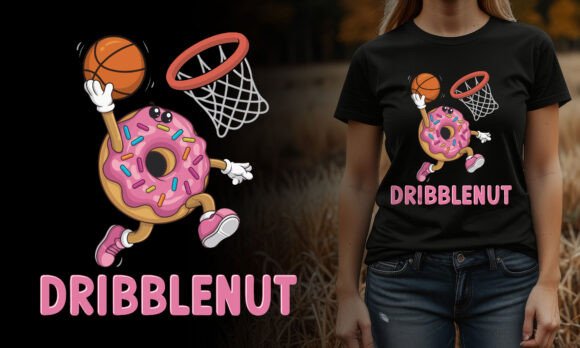
Dribblenut Donut Graphics for T-Shirt Designs
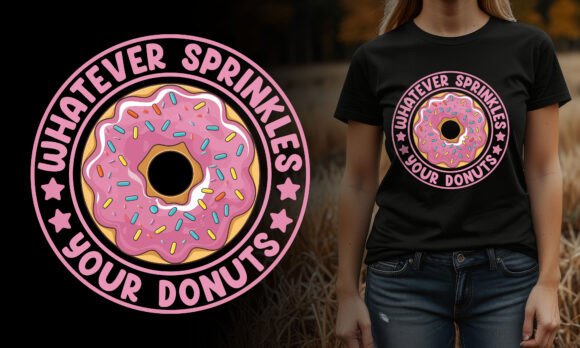
As a graphic designer who has spent the better part of two decades refining brand identities and preparing files for print-on-demand services, I have learned to look past the initial "cute" factor of any digital asset. When a client approaches me with a request for a playful, food-themed merchandise line, my first instinct is to scrutinize the vector quality and commercial viability of the core illustration. Recently, I evaluated the Dribblenut Funny Donut T-shirt Design for a boutique bakery client looking to expand into lifestyle apparel. This review breaks down how this specific graphic design asset holds up under professional scrutiny, moving beyond simple aesthetics to discuss its practical application in real-world commercial design projects.
First Impressions: Mood and Visual Identity
The immediate impact of the Dribblenut design is one of whimsical approachability. In an era where modern design often leans toward stark minimalism, there is a refreshing market for illustrations that evoke nostalgia and humor. This asset captures a distinct mood: it is lighthearted, slightly irreverent, and undeniably cheerful. For a small business branding project, especially in the food and beverage sector, this emotional appeal is crucial. It does not just sit on a canvas; it invites engagement. The visual elements suggest a hand-drawn influence, which aligns perfectly with the current trend favoring authenticity over corporate polish. However, as designers, we must ensure that this "handmade" feel does not compromise the technical precision required for scalable vector graphics.
Versatility Across Client Projects
While the product title specifies T-Shirt Designs, limiting this asset to apparel would be a missed opportunity. In my workflow, I consider how a single illustration can populate an entire marketing ecosystem. For the bakery client, we utilized this graphic not only for apparel but also for sticker design packs included with online orders. The robust lines and clear shapes translate well to sublimation design processes, ensuring that the colors remain vibrant on polyester blends. Furthermore, the asset serves as an excellent hero graphic for social media graphics, particularly for Instagram posts announcing new menu items or seasonal promotions. Its bold nature ensures it stands out in crowded feeds, acting as a visual anchor that stops the scroll.
Beyond digital screens, this illustration performs admirably in packaging design. When scaled down for a label on a donut box or a coffee sleeve, the key features remain recognizable. This is a critical test for any clipart or illustration: does it retain its integrity at smaller sizes? In this case, the answer is largely yes, provided the background contrast is managed correctly. It also works well as a decorative accent in editorial design layouts for local lifestyle magazines or blog visuals for food influencers. The flexibility of the file formats included—typically AI and EPS for vector editing—allows for seamless integration into Adobe Illustrator, Inkscape, or Corel Draw, making it accessible for designers regardless of their preferred software stack.
Strategic Placement and Visual Hierarchy
Understanding where to place this asset is as important as the asset itself. The Dribblenut Funny Donut T-shirt Design shines in large layout areas where it can breathe. It functions best as a central focal point on a tote bag, a poster, or the chest area of a garment. In these contexts, it drives the visual hierarchy, drawing the eye immediately. However, caution is advised when using it in complex backgrounds. Because the design likely features intricate details like sprinkles or glaze textures, placing it over a busy pattern can reduce readability and visual trust. It requires negative space to maintain its professional appearance.
Conversely, this asset should be used carefully in minimalist branding projects that demand strict geometric precision. If a client’s brand identity relies on ultra-clean sans serif fonts and monochromatic palettes, this playful illustration might clash with the established tone. It is not suited for corporate materials or high-end luxury positioning where subtlety is key. Instead, it thrives in environments that celebrate creativity and fun, such as Etsy product listings for handmade goods, children’s party invitations, or community event flyers. In these scenarios, the design enhances audience engagement by lowering barriers and creating a sense of shared joy.
Technical Considerations for Professional Use
Before delivering any final files to a client, I run a series of technical checks. Since this is a digital product delivered via zip file, containing AI and EPS formats, the first step is verifying vector editability. I open the file in Illustrator to ensure all paths are closed and that there are no stray anchor points that could cause printing errors. For print-on-demand sellers, checking the color profile is essential. Converting the design from RGB to CMYK may shift some of the brighter hues, so I always adjust the saturation to ensure the printed result matches the on-screen preview.
Another critical step is testing the design in black and white. This reveals whether the contrast is sufficient for single-color printing methods, such as screen printing or vinyl cutting for Cricut projects. If the details disappear in grayscale, I simplify the layers or increase the stroke weight. Additionally, I preview the asset on both light and dark mockups. A design that pops on a white t-shirt might vanish on a navy blue one if proper outlining or color adjustment is not applied. For those using this in Canva templates, ensuring the PNG transparency is clean and free of white halos is vital for a polished look.
Commercial Viability and Licensing
For freelance designers and agency owners, the legal aspect of using third-party assets is non-negotiable. Before incorporating the Dribblenut Funny Donut T-shirt Design into a paid client project, I always confirm the commercial license terms. Most creative marketplace assets allow for use in end-products sold to customers, such as physical t-shirts or mugs, but restrict the resale of the digital file itself. Understanding this distinction protects both the designer and the client from copyright issues. It is also worth noting that while the design is ready for immediate use, customizing it—such as pairing it with a complementary script font or handwritten font—can add unique value and differentiate the final product from competitors using the same base asset.
In conclusion, the Dribblenut Funny Donut T-shirt Design is a versatile and emotionally resonant addition to any designer’s library. It bridges the gap between playful illustration and commercial utility, offering strong performance across various mediums from web design to physical merchandise. By respecting its visual strengths and adhering to technical best practices, designers can leverage this asset to create memorable, engaging, and professionally executed projects for small business branding and beyond.